Writing: a love/hate relationship

For me, I have always had a love/hate relationship with writing. In high school, I never really was a fan of writing assignments or even writing a 500 word essay for an English exam. They were the bane of my existence, mostly due to the fact that we always wrote for a grade and never to learn. We would be asked to jot down a few paragraphs at the beginning of class about Hamlet, but what did that do if we were going to talk about the play anyways? When would I even use Hamlet after high school if I was planning on a different path than English? These were the questions that I would ask, but then after a couple years, I would become a little bit wiser.

It was during my senior year of high school that I actually enjoyed writing—although it mostly pertained to myself. That was the year that I had a lot going on in my personal life, and I seemed to lose sight of why I wanted to break the many cycles that I grew up in. Somehow I pulled myself together when applying to colleges and we were asked to write essays about ourselves and why we want to be there. Most people I knew dreaded writing about themselves because they feel like nothing about their story is unique or that they haven’t done things that they felt were “meaningful,” but for me it was a piece of cake. I have oodles of stories, and I know that they are important to who we are. In the wise words of Thomas King, “The truth about stories is that’s all we are.” Now, I love to write and love to tell my stories in a creative way (creative nonfiction is my FAVORITE genre!).

These days, writing for me enhances my writing in the fact that it slows down my thinking. Writing itself is a slower process than speaking or listening, as it probably took me a few minutes to write out this post. As I write, I have to think about every letter on the keyboard and which one to go to next, while thinking about my ideas coming up, and how I want to synthesize that with what I already know. A lot goes on, but it gives me more time to sit on it and think critically on what I really want to say.

As a student, I like to take notes in a more time-consuming process than other people. For me to learn, I have to take notes before the lecture. Strange, I know, but it helps because if I go into class with all of the information on the slides, all I have to do is listen to the professor and add in the things they say outside of the slides. With the extra information, it usually is helpful in synthesizing what I “learned” in writing the slides down beforehand. Then after, I physically write down my notes, and to keep my attention when making them, I color code different sections and use stickers. Somehow through trying to be attentive to what I am writing, and it helps me learn the material better!

The “outs and outs”of creativity

What even is creativity? How do we create incredible pieces of art, music, or literature? Can anyone really put a single definition on this one word? How do we even begin a piece of writing from “nowhere”?

Image result for freewriting

In article about the definition of creativity, Mark Runco and Garrett Jaeger write that the definition of creativity is made up of two aspects: ORIGINALITY and EFFECTIVENESS. In the article, they discuss how necessary both are. At one point, they state that original things have to be effective in order to be creative. However, I kind of disagree that all ideas have to be original because in many ways, we get our ideas from previous ideas, someone else, or somewhere else. We are always inspired by our world around us, but this article feels like it can’t be in some ways, that we have to think outside of the outside of the creativity box.

Image result for freewriting

In the creative process with anything, I start off with clearing my head. I close my eyes, take some breaths, and relieve any kind of stress. For me, it gives the mind a little bit less to think about other than being in the moment.

If I am about to create pieces of writing, I start of with a few minutes of free writing. A timer is set for a few minutes, and I just type/write without thinking. I may go in with a few ideas but usually I try not to think. Just whatever comes to mind first. After the alarm goes off, I stop and look over with what I wrote. Some ideas I keep, and some I keep for much later. The ones that I think are relevant for the moment, or fit some kind of theme that I am going for, I will use and do another round of free writing only on those chosen ideas. In a way, I use a filtering system to develop my ideas, and the ones I don’t use will become “archive material” that I can use later when I get inspiration.

I feel that free writing helps me a lot in the sense that thoughts somehow appear on the paper (or screen) without having to think about it so much. That “writer’s block” cycle breaks a little bit and thoughts can find their way to out and creative juices can flow.


On reading “well”

When I was younger, I lived on the reservation, and living conditions were not the best. Schools on the reservation were lucky if there was a book for everyone in classes. I don’t remember how often I even went to school, because it wasn’t required at all. At least by my parents’ standards.

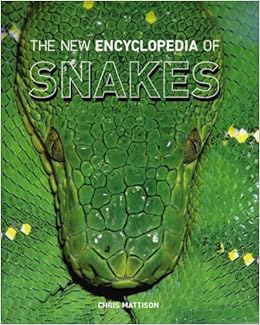
After some time on the Rez, my sisters, mom, and I started moving a lot. We changed schools every year or at least twice a year because of how often we moved, and I hardly remember going to school. I did remember going to the library a lot to look at books with my class. My favorites were books about snakes, as I thought they were intriguing to look at although I couldn’t read them well. Checking out a variety of books often helped me teach myself to read more difficult books; I would use my dictionary to look up meanings of words that I did not understand. I would also read to my older sister and she would help me sound out the words I struggled with and sometimes I would even read to my mom for more practice.

Image result for snake encyclopedia

In school, I felt like I had to do more of my learning outside of the classroom because I was a little behind, but I never stopped trying in times of frustration. I actually really loved school! Reading became easier once I was in 5th grade and slightly more stable. Often, I would check books out and read many books a week so I could get the highest AR test scores in my grade! I had many favorites, but the ones I remember reading a lot were the Harry Potter books and The Outsiders!

Image result for the outsiders book

About a year ago, I was tested for ADHD, and when I got my results, my therapist also told me that I had a Learning Specific Disorder in Reading. It made sense, as she said it was probably because of how much I moved when I was younger, when learning to read is critical. Huge red flags included scoring lower than my potential on standardized tests such as the ACT and SAT, and it all clicked because I never knew why I couldn’t do better. I was told I wasn’t as smart, and I believed it. However, I have learned to turn that “weakness” into something better, and although I have my moments, I figure out new ways to work around the labels that people give me.

Image result for baby meme yes

On the History of Writing

Upon thinking about the history of writing, I have always wondered how it eventually developed across the globe. In the handbook of the History of Writing, we see that writing first started developing around 3500 B.C.E., and that art had already developed at least 30,000 years before that. We see its prevalence in many cultures around that world in that time period, which was really interesting to read.

Some of the most intriguing points to me include the writing origins in Chinese/Mandarin and the many issues technology has when coding well over 9,000 characters into one keyboard. Phonetics play a huge role in language, and some characters represent a sound, and there are others that have very similar sounds and completely change the meaning of words; if the computer coded it wrong or couldn’t code the inflection changes, it could pose an issue possibly.

Another idea that captivates me is the idea of idiomatic expressions. They exist in every language and yet can not translate into others without losing the meaning behind them. In the years that I have been learning Italian, I find that there are more and more, but I can never share them with my friends because, well, it’s another language that they don’t understand it the way that I do. But when we discussed it in class, it was cool to listen to what others thought about language translations/dialects/accents.